
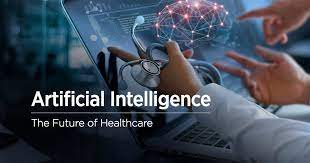
AI has revolutionized the healthcare industry, offering numerous benefits that enhance patient experiences, streamline operations, and connect fragmented data. Healthcare organizations can unlock valuable insights and improve satisfaction for internal stakeholders and individuals by harnessing machine learning and analyzing large datasets.
One of the critical advantages of AI in healthcare is its ability to provide user-centric experiences. With AI technologies, organizations can leverage data patterns to gain deep insights quickly and accurately, improving patient satisfaction, healthcare professionals, and staff satisfaction. By optimizing data, assets, and resources, AI improves operational efficiency, enhancing clinical and operational workflows, processes, and financial operations performance.
AI also plays a crucial role in connecting disparate healthcare data. In the healthcare industry, data is often fragmented and exists in various formats. By leveraging AI and machine learning, organizations can seamlessly integrate disparate data sources, obtaining a unified and comprehensive picture of individuals’ health profiles.
Medical imaging is an area where AI has had a significant impact. AI solutions applied to medical imaging assist cardiologists and radiologists by automating labor-intensive tasks such as image scanning and case triage. These technologies surface relevant insights, allowing healthcare professionals to identify critical cases promptly, make accurate diagnoses, and potentially avoid errors. With AI algorithms, vast datasets generated by clinical studies can be analyzed for patterns and hidden relationships, enabling imaging professionals to access critical information rapidly.
However, the adoption of AI in healthcare is not without its challenges. Regulatory compliance and trust issues related to machine learning results pose significant hurdles. Despite these obstacles, integrating AI and machine learning in the healthcare industry has resulted in tangible benefits for healthcare organizations and individuals. AI streamlines workflows automates mundane tasks, and provides quick access to answers, improving overall experiences for patients, members, citizens, and consumers.
AI in healthcare encompasses the application of machine learning algorithms and cognitive technologies within medical settings. These technologies enable computers and machines to mimic human cognition, learn, think, make decisions, and act. AI in healthcare involves leveraging machines to analyze and act upon medical data to predict specific outcomes.
Medical diagnosis is a critical use case for AI in healthcare. By utilizing patient data and other relevant information, AI aids doctors and medical providers in delivering more accurate diagnoses and treatment plans. AI also contributes to a predictive and proactive healthcare approach by analyzing big data to develop enhanced preventive care recommendations.
The significance of AI in healthcare cannot be overstated. Given the critical role of healthcare in society, applying AI to healthcare data can be a matter of life and death. AI supports healthcare professionals in their daily work, enhances preventive care and quality of life, improves diagnoses and treatment plans, and leads to better patient outcomes. Moreover, AI can predict and track the spread of infectious diseases by analyzing data from various sources, making it an invaluable tool in combatting epidemics and pandemics, thus contributing to global public health efforts.